Consolidate vendors, streamline tech, & protect margins across every practice
Multi-location DSOs with 25, 100, or more practices can improve EBITDA by consolidating vendors, standardizing a proven technology stack, and giving a single accountable partner permission to run. When one experienced team owns planning, design, procurement coordination, cabling, network rollout, carrier management, and site conversions, de novo offices open faster, acquisitions integrate sooner, and costly rework disappears. The result is measurable savings across circuits and licensing, fewer delays, less downtime at the chair, and a consistent patient and staff experience systemwide.
Give us the green light. We'll run the rollout.
One accountable partner for design, cabling, network, carriers, and site conversions.
Faster openings. Fewer change orders.
The cost problem DSOs face
These problems are often framed as “support issues,” but the root cause is architectural. True savings come from standardizing what every office runs and how it is built, not from adding more tickets to a help desk. That is why DSOs benefit most from managed IT services delivered by a partner that leads complex multi-site projects end to end.
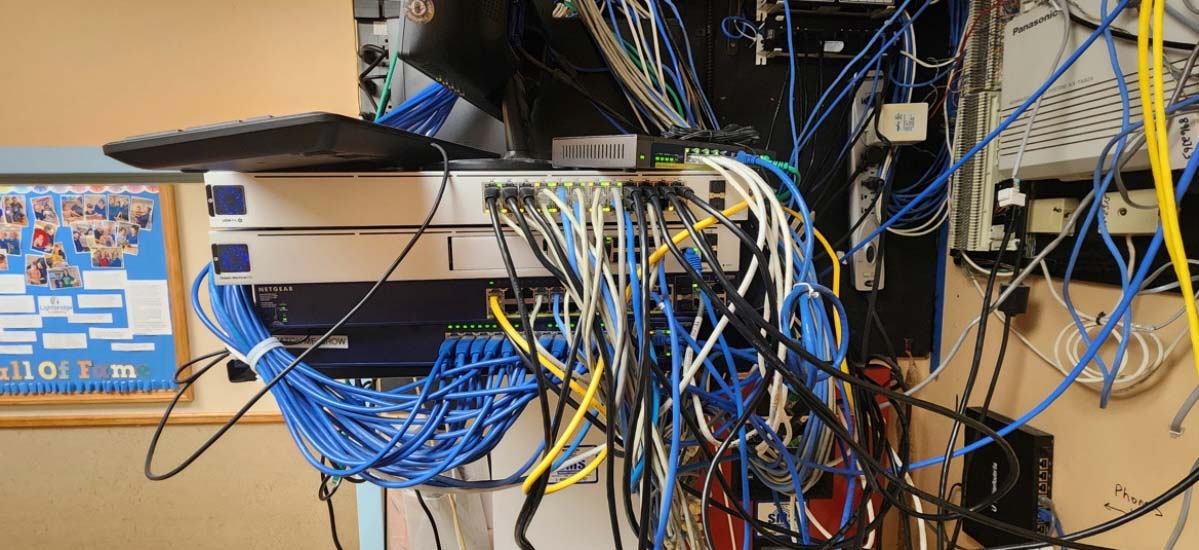
Growth multiplies complexity. A typical dental DSO inherits different carriers, closets, Wi-Fi configurations, firewall brands, and purchasing habits at every location. Vendor sprawl creates invoice noise and weakens volume pricing. Inconsistent standards inflate install hours and trigger truck rolls. M&A timelines slip because nobody owns the IT critical path, which pushes revenue to next month. Meanwhile, clinicians struggle with scanners, sensors, imaging workstations, and practice management systems that behave differently from site to site.
What managed IT means in a DSO context
Managed IT for a DSO is not a generic help desk. It is a hands-on program that designs and rolls out a consistent environment across every practice, then governs the lifecycle of that environment.
• Technology consultation and system design that fits dental workflows
• Network design and cabling that meet clinical and imaging requirements
• De novo office IT planning with repeatable playbooks
• M&A IT due diligence and structured site conversions
• Field services and nationwide rollouts coordinated with carriers and low-voltage vendors
• Ongoing vendor management and standards enforcement
Day-to-day end-user support can remain with your internal team or a separate provider. MellinTech focuses on planning and execution at scale so your practices launch and integrate on time and on budget.
Financial levers that move EBITDA
1. Vendor consolidation
Fewer contracts and fewer line items reduce accounts payable workload and eliminate duplicates. Consolidation unlocks volume pricing on circuits, hardware, and licensing, while a single accountable partner removes finger-pointing that leads to delays and change orders. For many DSOs, this is the fastest path to savings in dental IT services.
2. Standardization at scale
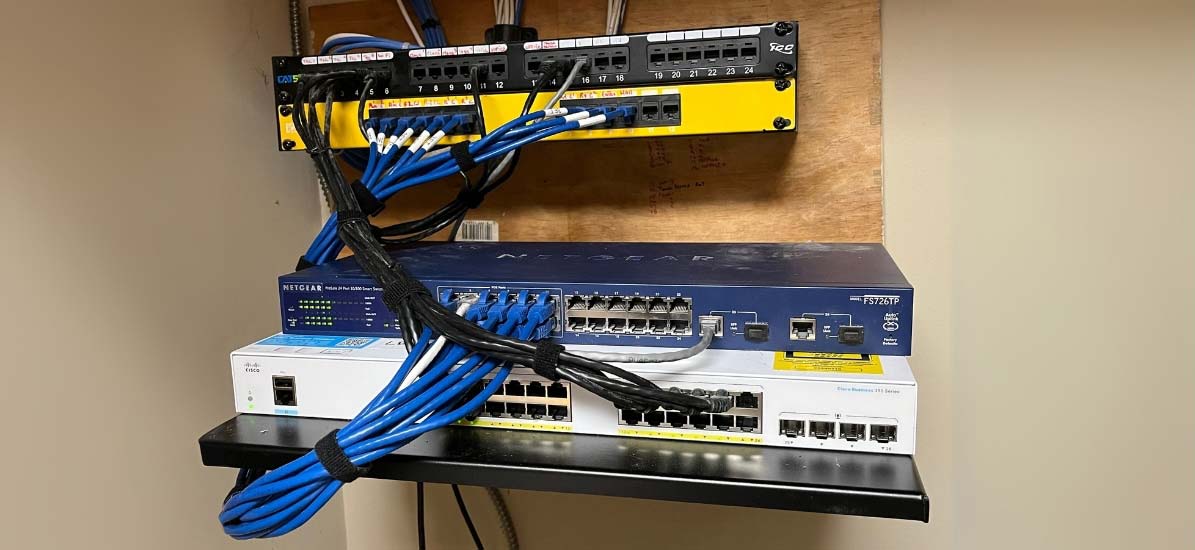
A curated bill of materials, pre-configured kits, and documented runbooks convert guesswork into repeatable builds. Technicians spend less time onsite. Install errors fall. New-hire training accelerates because every office looks and behaves the same. This is the core of dental managed IT services that actually cut costs.
3. Accelerated do novo openings
A de novo that opens two weeks earlier captures revenue sooner. A managed partner sequences carriers, low-voltage, and equipment in the right order, then lands a first-time-right install. Avoiding rush fees, overnight shipping, and weekend labor often covers the program cost by itself.
4. Faster M&A integration
During due diligence in mergers and acquisitions, the right team exposes risk in closets, circuits, security, backups, and third-party contracts. Post-close, structured site conversions remove redundant software and leverage the standardized stack. Shorter integration windows reduce parallel run costs and speed the benefits you promised the investment committee.
5. Downtime prevention
Designing for resilience beats paying for outages. Proper WAN architecture, business-class Wi-Fi, segmented VLANs, and tested backup and failover protect chairside revenue and call center operations. Clear incident workflows reduce on-site dispatches and protect patient schedules.
6. Lower total cost of ownership
Right-sizing circuits, eliminating orphaned licenses, and cleaning up closets reduce both capital expenditures and operating expenses. Centralized procurement produces predictable pricing. Lifecycle planning avoids surprise refresh spikes and keeps imaging and peripherals on supported versions.
7. Risk and compliance cost avoidance
Standard security baselines align with HIPAA compliance for dental offices. Consistent identity management, endpoint protection, backups, encryption, logging, and vendor oversight reduce the chance and cost of a breach. Audit-ready documentation avoids expensive remediation and reputational damage.
Appoint your rollout partner for new construction and M&A site conversions. Call MellinTech at 877.580.5008.
Non-financial gains that compound value
• Consistent patient experience across every practice builds brand trust
• Happier clinicians due to stable imaging, voice, and practice management performance
• Leadership visibility via dashboards that track openings, integrations, and site readiness
• Internal IT time freed for analytics, clinical applications, and roadmap work
These improvements strengthen recruiting and retention, reduce burnout, and make future growth easier to absorb.

The managed stack: what gets standardized
A partner with DSO experience codifies a stack that balances performance, security, and cost.
• Network: SD-WAN or suitable routing, next-generation firewalls, business Wi-Fi, VLANs, QoS for voice and imaging
• Cabling and closets: labeled drops, clean power, racks, UPS, environmental monitoring
• Core services: identity and access control, device build standards, endpoint security, patching, backup policies
• Site readiness: carrier coordination, low-voltage oversight, vendor scheduling, and site acceptance checklists
This is the foundation that turns dental IT support from reactive to predictable.
Sample ROI model you can tailor
Use your own numbers, but here is a structure to quantify value.
• Inputs: number of locations, operatories per site, revenue per chair per hour, average downtime hours per month, average days delayed at opening, monthly carrier and licensing spend, number of on-site dispatches
• Before standardization:
- 30 minutes of downtime per site per week at 4 operatories equals 2 hours lost revenue per site monthly
- 10 days average de novo delay and 45 days to integrate an acquisition
- Redundant licenses and over-provisioned circuits across 30 percent of sites
• After managed rollout:
- Downtime reduced by 60 percent
- De novos average 3 days faster to open, acquisitions integrate 15 days sooner
- 15 to 25 percent reduction in carrier and licensing spend
- 40 percent fewer truck rolls
For a 60-site DSO, the combination often produces a 6 to 12 month payback while improving patient experience and clinician satisfaction.
Engagement model with a high-autonomy partner
Great outcomes come from clear ownership. Here is how a vendor like MellinTech operates when granted authority to deliver.
1. Discovery across representative sites to document current state and risks
2. Reference design and bill of materials presented for approval
3. Pilot site to validate the standard, then wave-based rollout with weekly burn-down reviews
4. Centralized procurement and change control to prevent scope creep
5. Executive cadence with KPIs for openings, integrations, and site acceptance
Your internal team stays focused on applications and strategy while the field engine executes.

Governance, security, and compliance
Every site follows the same baseline for identity, encryption, backups, and logging. Third-party management is centralized to enforce standards. Each location receives a closeout package that is audit-ready. This reduces breach exposure and makes HIPAA compliance dental office audits faster and less disruptive.
What remains with your team vs your partner
• Partner: project leadership, design, procurement coordination, cabling, network and security rollout, vendor management, site conversions, and nationwide rollouts
• Your team or a separate provider: end-user support and application-specific workflows
This division of responsibility ensures you get the benefits of managed IT services for dental offices without changing how your clinicians and staff request help.
How to get started
• Schedule a multi-site readiness assessment
• Approve the standard stack and rollout plan
• Launch a 90-day standardization sprint across priority sites
• Expand in waves with predictable costs, timelines, and measurable KPIs
Become a partner
Dental DSO leaders do not need another help desk. They need a partner who will take full ownership of complex, multi-location IT and deliver repeatable results. Consolidating vendors and standardizing the environment reduces cost, accelerates growth, and protects margins across every practice. If you want a vendor that can step in with autonomy, overdeliver, and earn your business for life, request a readiness review. You will receive a tailored ROI model, a reference design aligned to dental managed IT services, and a rollout timeline that moves your DSO dental network from reactive to reliable.